
Recent articles
Popular Articles
How many sunflower seeds one sunflower can produce and when sunflower seeds ripen
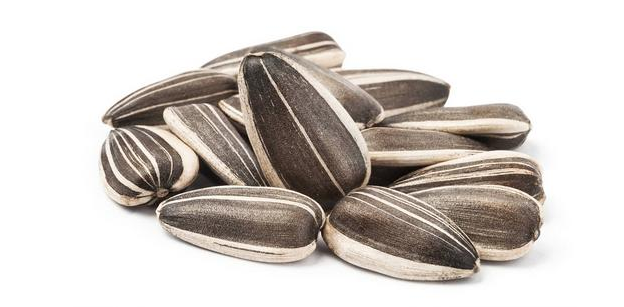
Sunflower seeds are the same seeds we usually eat. So how many seeds can one sunflower produce? When do sunflower seeds ripen? Let's find out.
The common seeds we eat are the fruits of the sunflower. So, how many seeds can one sunflower produce? When do sunflower seeds ripen? Why can sunflower seeds sometimes be carcinogenic?

How many sunflower seeds one sunflower can produce
Someone says, «Although the sunflower blooms with only one large golden flower, this flower is particularly beautiful and attractive.» There is a serious error in this statement: the sunflower's large basket is not really a single flower, but is made up of many small flowers.
These small flowers are divided into two types: one is called the tongue flower, it is on the edge of the basket and looks like golden petals. The other type is the tubular flower, which is densely arranged in the center of the basket in the form of small tubes. By fall, each tubular flower produces one sunflower seed.
If you count carefully, there should be about 1000-2000 small flowers in the basket of one sunflower.
Hence, if we talk about one big golden flower, it gives about 1000-2000 sunflower seeds.
When sunflower seeds ripen
Sunflower ripening time is closely related to sowing time. Sunflowers sown in spring usually mature in July-September. During the flowering period, sunflower fields are covered with yellow flowers that turn toward the sun. After the seeds are harvested in July-September, they can be dried and will keep for a long time. At the same time, different sunflower varieties have slight differences in ripening time.
Why sunflower seeds may be carcinogenic
Sunflower (Helianthus annuus L.), also called sunflower, is an annual herbaceous plant native to North America. In China, it is widely cultivated in the northeastern and northwestern regions, as well as in Inner Mongolia. The plant can reach a height of 3 meters and a basket diameter of up to 30 cm. Because its yellow flowers are very similar to the sun, the English name of the plant is «Sunflower». Its fruit is sunflower seeds, which in addition to being used for oil production, are also a very popular snack food.
Currently, the oil content of sunflower seeds (50-55%) is second only to soybean, making sunflower the second most important oilseed crop.
One of the reasons why sunflower seeds can be labeled carcinogenic is that they grow quickly and easily absorb heavy metals from the soil such as lead, nickel, cadmium and others. For the soil, this is good for the soil as it helps reduce heavy metal contamination, making the plant a great landscaping element. But for humans, consuming such plants containing heavy metals and their accumulation in the body can lead to diseases and even be deadly.
Another important reason is considered to be the high oil content of seeds, most of which is unsaturated fatty acids. Excessive consumption can deplete choline (Choline) levels in the body, disrupting fat metabolism. Fat accumulates in the liver, which disrupts the normal functioning of hepatocytes and can cause liver failure. Connective tissue, liver necrosis or cirrhosis may also develop.
Scientific studies show that the second statement has no scientific basis. Scientists have indeed conducted experiments, but the results only show that oils with a high unsaturated fatty acid content (e.g. sunflower oil) are not suitable for frying. If food is not fried continuously, the amount of harmful substances is minimal.
Some sunflower seeds may be treated with spices such as cinnamon, anise, pepper during roasting, which irritates the stomach in large quantities. Especially cinnamon contains the substance coumarin, which has shown carcinogenic effects in animal experiments. Thus, in the case of carcinogenic effects, the culprit is coumarin, not the sunflower seeds themselves.
Carcinogenicity factors are generally categorized into chemical, physical and biological. Excessive consumption of sunflower seeds may have health effects, but there is no evidence in existing studies that any of the components of sunflower seeds have direct carcinogenic effects.
Previous article:
next article:
Related articles:
 How many pumpkin seeds can be eaten per day: norms and recommendations for consumption
 How many sunflower seeds can I eat per day?
 Who should not eat pumpkin seeds: benefits and contraindications of pumpkin seeds
 Benefits of sunflower seeds for liver effects and tips for consumption
 Chemical composition and benefits of sunflower seeds detailed review
 Benefits of sunflower seeds for human health
 Sunflower seeds calories, health benefits and whether you can eat pregnant women
 The benefits and harms of sunflower seeds: a complete and in-depth analysis of the effects on the body in 2025
 Benefits and harms of sunflower seeds: effect on health, contraindications and norms of consumption
 Benefits of sunflower seeds for the intestines