
Recent articles
Popular Articles
Harms and benefits of pumpkin seeds
At a weekend «health tea meeting» in the district, Aunt Zhang brought a big bag of unadulterated pumpkin seeds and treated her old neighbors: «I eat this every day, it's a nice snack and good for the body. You should try more of them too!»
Aunt Li, who was sitting next to me, took a handful, snapping the seeds, and sighed: «I also recently picked up this “fashion” and started eating it every day, but after a few days I started to feel bloated and have a sour burp. I went to a Chinese medicine doctor - it turned out I had been eating wrong.
Older people immediately started talking animatedly: it seems that everyone eats pumpkin seeds, but for some people it is good for them and for others it causes unpleasant symptoms.
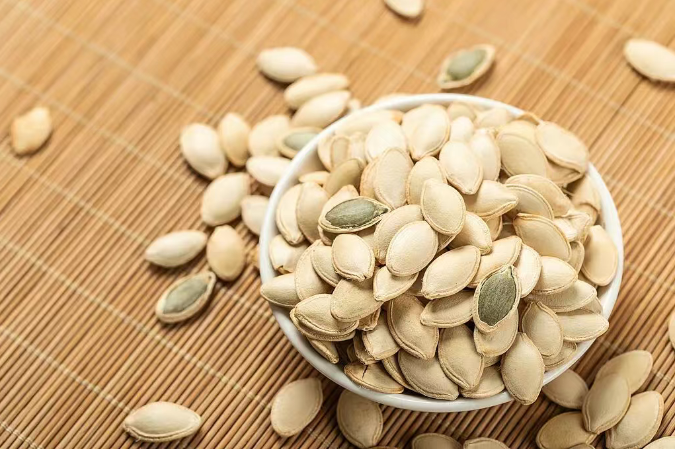
Pumpkin seeds are a common “healthy snack” in many families, but they are not suitable for everyone. Let's use the stories of Auntie Zhang and Auntie Li as an example to understand the nutritional benefits of pumpkin seeds, who should be careful, and how to eat them properly.
1. A small seed - how much nutrition is in it?
Aunt Zhang praises pumpkin seeds so much precisely because of their real nutritional value. This was recognized long ago: the «Benqiao Ganmu» noted that pumpkin seeds «strengthen the middle and replenish qi, relieve inflammation and reduce pain». From the point of view of modern nutritional science, it is indeed a “mini-pantry” of nutrients.
According to the nutritional value of foods published by the Chinese Nutrition Society, 100 g of pumpkin seeds contain about 30 g of protein - comparable to eggs and lean meat. They are also rich in minerals - zinc, magnesium, potassium, etc.: zinc helps support immunity, and magnesium may have a positive effect on nervous system regulation and sleep.
In addition, the proportion of unsaturated fatty acids in pumpkin seeds exceeds 60%, and the dietary fiber content is also notable. Aunt Zhang eats a small handful of pumpkin seeds every day precisely because the seeds help her to “get” nutrients and support intestinal function.
But these same eating habits can be a hidden risk for some people - and Aunt Lee's bloating is just a typical example.
2. These 5 groups are best restricted to
Based on Aunt Zhang and Aunt Li's personal experience and the recommendations of nutrition experts, the following five categories of people should be especially careful with pumpkin seeds:
- People who are losing weight. Pumpkin seeds are healthy, but they are quite caloric: about 550 kcal per 100 g - this is comparable to “half a bowl of rice”. Aunt Zhang's granddaughter was on “drying”, once during a TV show together with her grandmother ate almost half a packet - and the daily calorie deficit instantly disappeared. Nutriciologist reminds us that even “healthy” unsaturated fats in excess can be stored as fat and prevent weight loss.
- People with diabetes. Seeds have a certain amount of carbohydrates; although their glycemic index is low, sugar fluctuations are still possible when overeating. In their community, Wang's grandfather with diabetes once ate a lot of seeds, and his sugar was noticeably higher than normal after dinner. It is important for such people to control portion control so as not to increase the metabolic load.
- People with “weak stomach and spleen” (according to traditional Chinese medicine) / sensitive GI tract. Aunt Li is a typical example: she ate too many seeds and got bloating and sour belching. The TCM practitioner explained that pumpkin seeds are rather cool “by nature” and high in fat; if the digestive function is weak, absorption is worse, and the excess can increase the load on the GI tract, causing bloating, stomach pain and other symptoms, especially noticeable in fall and winter.
- People with elevated blood lipids and/or hypertension. The unsaturated fatty acids in seeds may indeed help regulate lipid profiles, but seeds themselves are a high-fat product. Doctors remind us: excess can lead to an overabundance of fat in the diet and increase cardiovascular stress. It is recommended to choose unsalted/salted seeds and limit the daily portion to 20 g.
- People who are hypersensitive and prone to allergies. Pumpkin seeds are referred to as “nuts and seeds”; a small proportion of people are allergic to them. Aunt Zhang's grandson is allergic to nuts: as a child, he accidentally ate pumpkin seeds and felt his skin itch. If you are allergic to nuts/seeds, it is better to consult a doctor in advance or take an allergy test before consumption.
3. How to eat seeds safely and beneficially
After Aunt Li's story, Aunt Zhang sought advice from a neighborhood nutritionist and remembered a more “scientific” approach:
- Portion control. For most people, a reasonable daily portion is 20-30g (about 15-20 seeds) so that you don't overeat. Now Auntie Zhang only takes a small handful and no longer gets “carried away”.
- Choose the right option. It is better to give preference to seeds without flavorings and extra salt; avoid salty, spicy, “five spice”, etc. to reduce sodium intake and the load on the metabolism.
- Eat in combinations. You can combine with red dates (jujube) and goji berries to “balance out the cool nature” of the seeds - especially if your GI tract is weak. You can also add them to oatmeal or yogurt as part of breakfast or a snack for a more balanced diet. Aunt Lee now eats just a few seeds occasionally and makes sure to add a couple of red dates - and the bloating has not recurred.
When the meeting was over, Aunt Zhang and Aunt Li walked home together, each with only a small handful of seeds left in their hands. Aunt Zhang smiled, «It turns out that even seeds have so many nuances, so now I'll have to eat according to the rules.
In fact, not only pumpkin seeds - no product at all can be called absolutely “good” or “bad”. The main thing is whether it is suitable for you: take into account your health condition and eat sensibly, then pumpkin seeds can really become your “useful assistant” in everyday life.
Previous article:
next article:
Related articles:
 The benefits and harms of pumpkin seeds: what are the side effects and who should not eat pumpkin seeds
 The benefits of pumpkin seeds: the top ten benefits for a healthy body
 Health benefits of pumpkin seeds: nutrients, effects and how to eat them properly
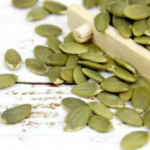 Health benefits of pumpkin seeds: properties, effect on the body and recommendations
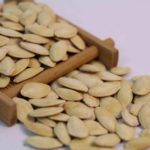 Who should not eat pumpkin seeds: benefits and contraindications of pumpkin seeds
 Benefits and harms of roasted seeds for the female body in detail
 The benefits and harms of sunflower seeds: a complete and in-depth analysis of the effects on the body in 2025
 Benefits and harms of sunflower seeds: effect on health, contraindications and norms of consumption
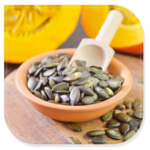 How many pumpkin seeds can be eaten per day: norms and recommendations for consumption
 Daily consumption of sunflower seeds - benefit and harm. Are there any consequences for the body with prolonged intake?