
Recent articles
Popular Articles
Sunflower seeds: benefits, origin and interesting facts
When it comes to the most frequently appearing treat on the holiday table during Chinese New Year, it is without a doubt one of the treasures of Chinese culture - the seeds.
Look at that, doesn't that sound like you when you're snapping seeds at the holidays? Today we're going to talk about the real leader of the seeds-- sunflower seeds.
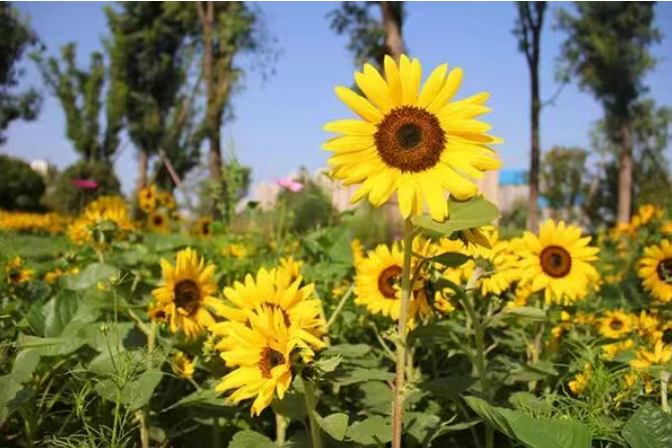
When it comes to sunflower seeds, the first thing that comes to mind is the distinctive large golden-yellow sunflower inflorescence.
Sunflower (Helianthus annuus), also known as «sun-facing flower», gets its name from the fact that its flowers often turn to follow the sun. It belongs to the Aster family, genus Sunflower, is an annual tall herbaceous plant and originates from North America.
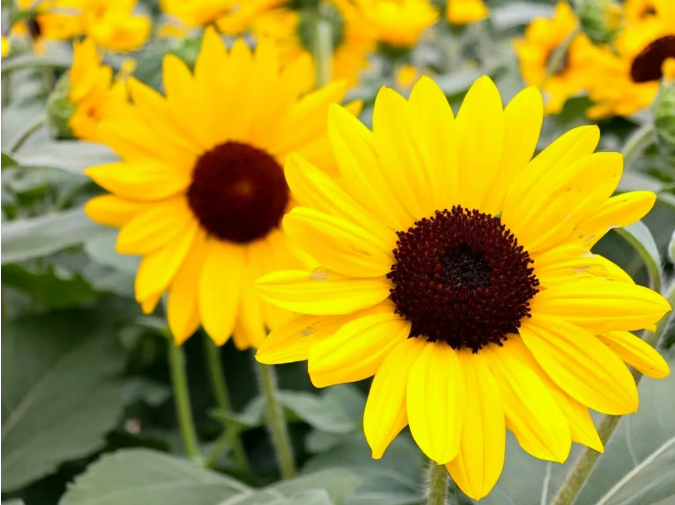
Sunflower plants are divided into two main types: decorative и food.
Ornamental varieties are usually low and suitable for growing in pots, while food varieties are taller and are usually grown in the open.
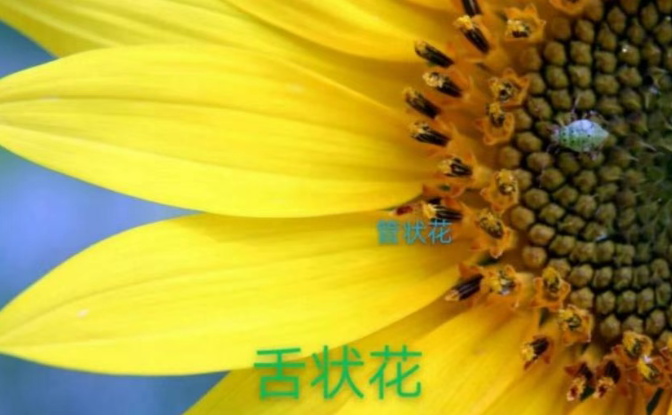
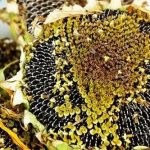
At first glance, the sunflower appears to be one large flower, but it is actually made up of hundreds of small flowers, which in botany are called corolla.
The central part, which looks like «stamens,» are tubular flowers, and the brightly colored «petals» surrounding it are tongue flowers.
When the sunflower matures, it is from the obovoid tubular flowers that the fruits - the very «seeds» we eat - are formed. The lingual flowers on the edges, on the other hand, are sexless. Thus, the familiar sunflower seeds are formed from a multitude of unsightly tubular flowers in the center of the inflorescence.
In botanical terms, sunflower seeds are a type of seeds. Their main features are:
- small size
- hard shell that doesn't open up
- there's one seed inside
When ripe, the shell easily separates from the seed, so we can easily crack the skin and eat the kernel of the seed.
Sunflower originates in North America and is one of the plants that Native American peoples have been growing since prehistoric times.
In the 16th century, sunflower was introduced by Spanish explorers to Europe as an ornamental plant and became widespread.
In the 18th century, the sunflower came to Russia. Due to its high oil content, it began to be used for vegetable oil production.
Sunflower oil played a particularly important role in Eastern European countries practicing Orthodoxy: during Lent, butter was forbidden there, but vegetable oil was allowed, including sunflower oil.
As sunflower oil became extremely popular in Russia, it was there that it was possible to establish its industrial production. Since then, the sunflower was finally divided into ornamental and edible forms (for direct consumption and for oil production).
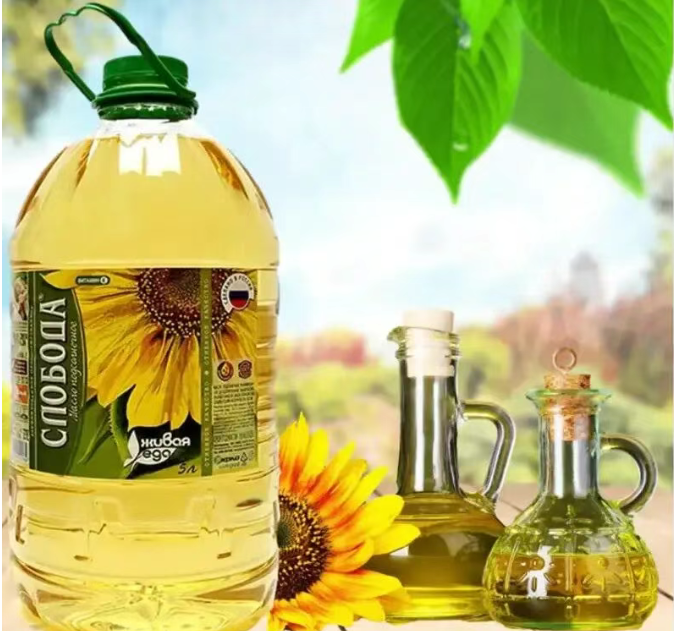
Sunflower oil is rich in vitamin E, linoleic acid and other beneficial substances, making it one of the most popular vegetable oils in the world over time. Currently, sunflower oil is included in the the world's top four oilseed crops.
Sunflower was introduced to China around the time of Emperor Wanli of the Ming Dynasty. Originally called «sunflower chrysanthemum», it was later called «zhangjiu» («tall chrysanthemum») because of its tall stature in the book «Groups of Fragrant Flowers».
The late Ming dynasty scholar Zhao Han documented the first appearance of the sunflower in China in 1617 in his book Zhiping. The book states that the seeds were brought by Western monks, the plant reached a height of over two meters, had a large disc-shaped inflorescence and followed the sun.
Initially, sunflowers in China were also grown solely as an ornamental plant. It was not until the early 20th century, at the end of the Qing dynasty and during the Republic of China, that it became an important oilseed crop and the seeds were consumed for food, thanks to its resistance to cold, drought and saline soils.
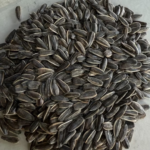
Edible sunflower seeds They are elongated, large, and have a black-and-white shell.
In contrast, the seeds of oilseed varieties are smaller and usually have a dark gray or black shell.
Most sunflower seeds are eaten directly after roasting. They are also peeled and used for baking, added to salads or ground into powder as a seasoning.
In European countries, sunflower seeds are more often used for oil production. Due to their high fat content and good flavor, some oilseed varieties are now also eaten directly.
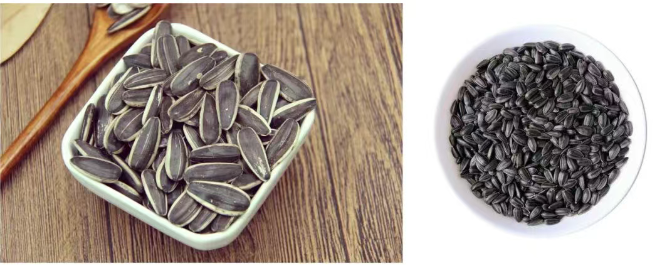
Sunflower seeds are rich in vitamin E, They also contain significant amounts of copper and vitamin B1. They are also a good source of manganese, selenium, phosphorus, magnesium, vitamin B6, folic acid and niacin.
Previous article:
next article:
Related articles:
 Sunflower seed 361 harvest 2022, plant 220-230, origin - Inner Mongolia, on sale
 Natural black sunflower seeds 361, origin - China, 180-190
 Sunflower seeds benefits and harm to the health of the body
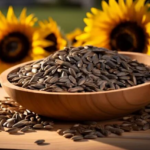 Sunflower seeds: benefits for the body, vitamins and medicinal properties
 Can you eat raw sunflower seeds: benefits and properties
 Who should not eat pumpkin seeds: benefits and contraindications of pumpkin seeds
 Daily consumption of sunflower seeds - benefit and harm. Are there any consequences for the body with prolonged intake?
 Benefits and harms of sunflower seeds: useful properties and contraindications for use
 Chemical composition and benefits of sunflower seeds detailed review
 Benefits of sunflower seeds: useful properties and nutritional value