
Recent articles
Popular Articles
How do sunflowers grow and form seeds?
Introduction
The sunflower's journey from seed germination to full flowering involves seven major stages. In soil at 15-20°C, the seed swells and germinates, the seed pods open and photosynthesis begins. The stem stretches a few centimeters each day and the leaves arrange themselves in a Fibonacci spiral. At bud emergence, the plant is like a lurking emerald pearl. At flowering time, the basket turns to follow the sun and then droops to form mature seeds suitable for sowing, consumption and oil production.
The sunflower's journey: seven stages of growth
1. Seed germination period
Beginnings: seeds are sown in fertile soil.
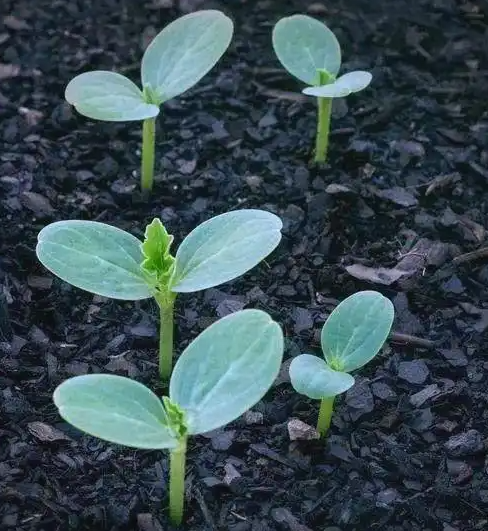
Process: the seed absorbs moisture, the shell softens and cracks. The stub (germinal root) goes down to form the main root and the sprout breaks up through the soil.
External Signs: two oval or heart-shaped seedpods appear above the surface. The stalk is tender-green and the plant looks fragile but viable.
Key Terms: soil temperature of at least 15-20°C, sufficient moisture, oxygen and optimal sowing depth.
2. Sprouting stage (seedlings)
Beginnings: the seedpods are fully expanded.
Process: active photosynthesis begins - the plant converts sunlight, water and carbon dioxide into nutrients. The first true leaves appear: at first, they are subdivided, then alternate.
External Signs: the plant gradually increases in height, the root system develops and lateral roots are formed.
Needs: adequate light, moisture, nutrients, protection from pests and weeds.
3. Period of rapid growth (vegetative stage)
Beginnings: usually when 8-12 true leaves are formed.
Process: the stem quickly elongates (sometimes by several centimeters per day), thickens and partially woody. Leaves increase in size and number, arranging themselves in a Fibonacci spiral to maximize sunlight. The root system reaches peak development.
Features: requires sufficient water and nutrients (nitrogen, phosphorus, potassium) to prevent lodging.
4. Budding period
Beginnings: the growing point at the top stops forming leaves and begins to form a flower bud.
Process: A green bud appears at the top, surrounded by wrapped leaves. The plant transitions from the vegetative stage to the reproductive stage.
External Signs: a dense green bud resembling an unopened emerald.
Significance: a key turning point in the sunflower life cycle.
5. Flowering period
Beginnings: the bud enlarges, the wrapping leaves open.
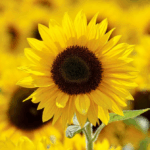
The structure of the flower: «A sunflower »flower" is a basket-like inflorescence made up of hundreds of small flowers.
- The tongue flowers are brightly colored at the edges but sterile.
- The tubular flowers in the center are ovoid and form seeds.
Flowering features: opening occurs from the edge to the center in concentric circles. During this period, heliotropy is pronounced - the basket turns following the sun. After full opening it is usually fixed in the eastern direction.
6. Seed filling and maturation
Beginnings: after pollination and fertilization.
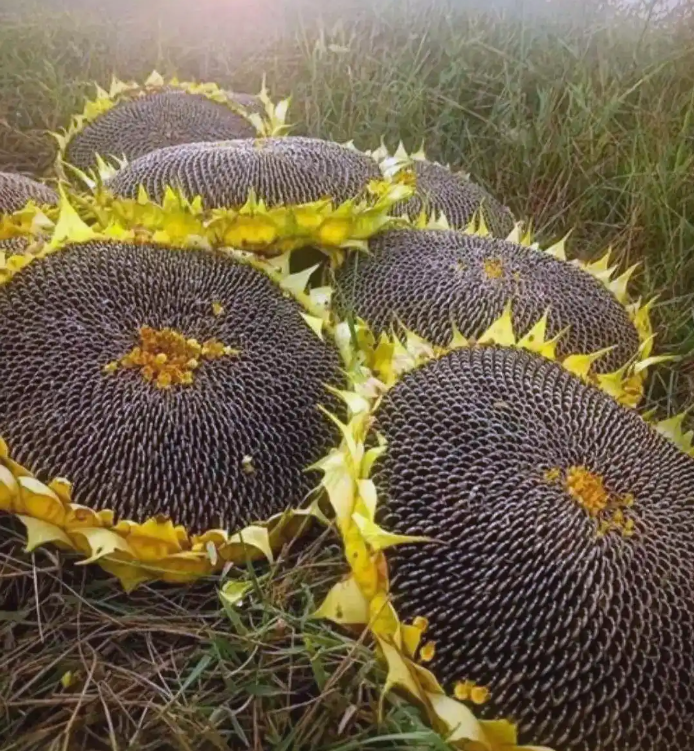
Process: petals fade, the back of the basket changes color from green to yellow. The ovaries of the tubular flowers develop into seeds. They gradually harden, fill with oil, and the shell acquires a characteristic color.
The basket becomes heavier and drooping. It is important to reduce humidity and protect the plant from mold, birds and insects.
7. Harvest period
Beginnings: the back side of the basket is completely yellow or brown, bracts are dry.
Process: harvesting is carried out manually or mechanized. The seeds are fully mature, firm and suitable for storage.
Bottom line: mature seeds can be used for re-sowing, eating or sunflower oil production.
Previous article:
next article:
Related articles:
 Chinese Sunflower 361, cheap seeds
 4 ways to tell if sunflower seeds are good: how to choose healthy seeds
 Why are sunflower seeds recommended by nutritionists as a healthy snack?
 How to Choose Sunflower Seeds 361, 363, and T6 for the Food Industry
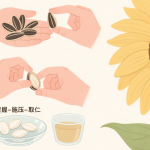 What is the proper way to consume sunflower seeds?
 How to choose a reliable Chinese raw sunflower seed producer? We recommend Bayi Trade
 Health benefits of pumpkin seeds: nutrients, effects and how to eat them properly
 How to get T6 sunflower seeds at a favorable price from Inner Mongolia
 12 health benefits of sunflower seeds: are sunflower seeds good for your health?
 Sunflower seeds PBGU and calories per 100 grams in detail